
Meet Our Pastor, Very Reverend Brandon Guenther
& Parochial Vicar Father Brian Ward

V. Reverend Brandon Guenther, Pastor
Reverend, Brian Ward, Associate Pastor

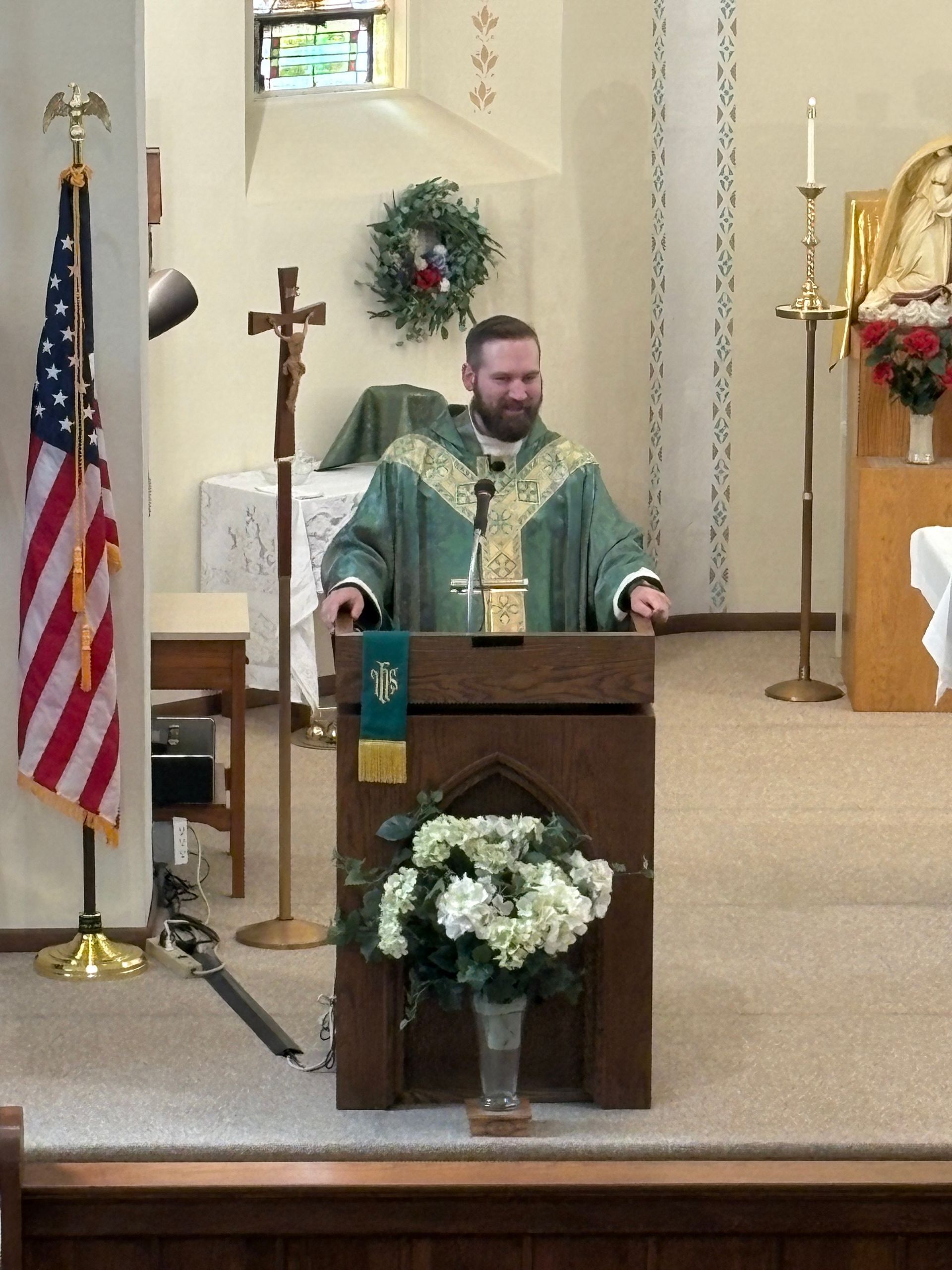
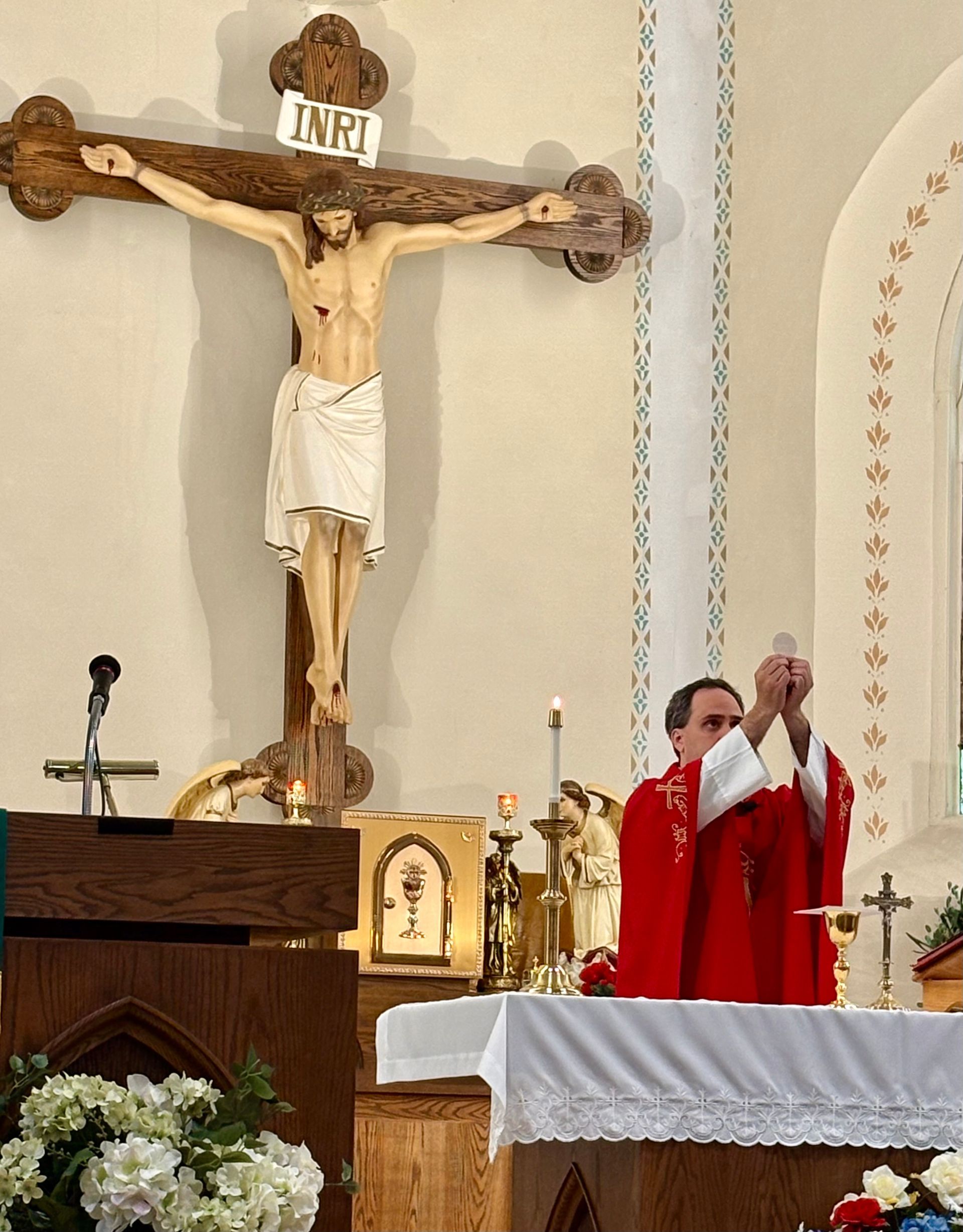


Welcome Very Reverend Brandon Guenther
July 26, 2026 17th Sunday in Ordinary Time
Dear Parishioners,
What is prayer? That seems like a simple question, but maybe take a second and answer in your own words…what is prayer? There are so many ways to define “prayer.” But there are a few definitions that I think we can find helpful as we seek to be holy. Holy people go to heaven. And holy people pray!
Maybe the simplest way to define prayer is simply “talking with God.” Indeed that is what prayer is at its core. But maybe more deeply, being able to talk with God is truly incredible in and of itself. The creator of the universe not only gives us the ability to talk with Him, but He enjoys talking to us! This definition highlights the relational aspect of prayer. If we knew of a married couple that deeply loved each other, but never talked, we’d probably wonder if they really loved each other! If we say we love God, but never talk with Him, do we really love Him?
Defining prayer as “talking with God” also highlights the necessity of silence in prayer. Sometimes we call this meditation or contemplation, but very simply we can and should spend time in silence with God. If prayer is “talking,” then this makes sense. If we say all the words, prayer isn’t not talking with God, it's talking at God. Prayer necessarily leaves room for God to speak. God often chooses not to speak audibly in our ears, but, in my experience, He speaks softly and slowly directly to our hearts…if we are listening.
Another definition of prayer might simply be “communing with God.” Communing (or communicating) is very similar to “talking,” but has a different connotation. Communing means “sharing life” with God. Sharing our joys, struggles, and everything in between. And God shares His life with us; we sometimes call this “grace:” the free, unmerited favor and love of God. Sharing life with God is seen most especially in the Eucharist (AKA Communion), where Christ literally shares Himself with us and we with Him.
This week I’d like to challenge you to first spend time with God, if you don’t already. And if you already pray regularly, simply ask God how he’d like to talk with you. How can you commune more deeply with Him? You might be surprised by the answer!
27th Sunday in ordinary time, October 4th, Respect Life Sunday
From the Desk of Reverend Brian Ward
Today, on this Twenty-seventh Sunday in Ordinary Time, our readings invite us to reflect upon the vineyard of the Lord. Now, I am not a gardener. But I do know what it is like to work hard for things, to pour your heart into something, and hope that it bears fruit. God does the exact same thing with us. Centuries ago, He planted the Jewish people. He cleared the stones, built a hedge of protection around them, and gave them His law, hoping they would bear the fruit of righteousness. But sadly, they chose to live lives of sin rather than for the Lord. Because of this fruitlessness, their nation was eventually overrun, and Jerusalem and the temple were destroyed by the Babylonians in 587 BC. Yet, the Lord didn’t give up on His people. He kept working with them. He kept investing Himself into them, waiting for them to bear fruit.
In the parable, when the landowner sends his servants—the prophets—to collect his share of the harvest, the tenants beat them, stone them, and kill them. Finally, the landowner thinks, "They will respect my son." Who is naked in His mercy, risking everything to win back their hearts. This, of course, points directly to the sending of Christ. But why did they think killing the son would give them the land? In ancient Jewish law, if a landowner went abroad and died without an heir present, the people occupying the land could legally claim it as their own property. The tenants weren’t just violent; they were calculating. They wanted to treat the landowner as if he were dead so they could become the owners.
When Christ asks the Jewish leaders what the landowner will do to those wicked tenants when he returns, they confidently reply to Him: "He will bring those wretches to a wretched end and lease the vineyard to other tenants." They didn't realize they were pronouncing their own doom.
Decades later, history witnessed this fulfillment. The Roman army came, drove out the Jewish people, and destroyed the temple. In the order of salvation history, the Catholic Church replaced the Jewish temple, becoming the new stewardship tasked with bringing God's grace to the world.
But there is a lesson for each one of us sitting in the pews today. We also have our own little vineyards given to us by the Lord: our own individual souls. We are required to work diligently to make our souls bear fruit for Him, and Him alone. The problem is that a lot of times, we want to go over and work on everyone else's vineyard but neglect our own. It is so much easier to look at our neighbor, our spouse, our coworkers, or our family members and point out how they need to prune their weeds and fix their soil.
But on judgment day, the Lord will judge us for how much fruit we borne, not on whatever fruit we tried to force others to bear. To fix our own vineyard, we must give control back to the Lord. We have to surrender our need to manage everything and dominate every outcome.
This surrender is never easy. In fact, we cannot do it alone. When we try to play the "owner" of our lives, the only things we successfully grow are fear, exhaustion, and anxiety.
Instead. We must do exactly what St. Paul tells us to do in our second reading today. We must change what we cultivate in our minds. St. Paul writes that we must think about, "...whatever is true, whatever is honorable, whatever is just, whatever is pure, whatever is lovely, whatever is gracious, if there is any excellence and if there is anything worthy of praise."
When we pull up the weeds of our own pride, stop obsessing over the vineyards of others, and fill our minds with these holy things, a supernatural trade happens. Our human fear and anxiety are uprooted, and they are replaced by the true, lasting peace of God.
